.svg)
Koh Samui Building Rules: Hillside Limits Since May 2025
· Luxy Samui
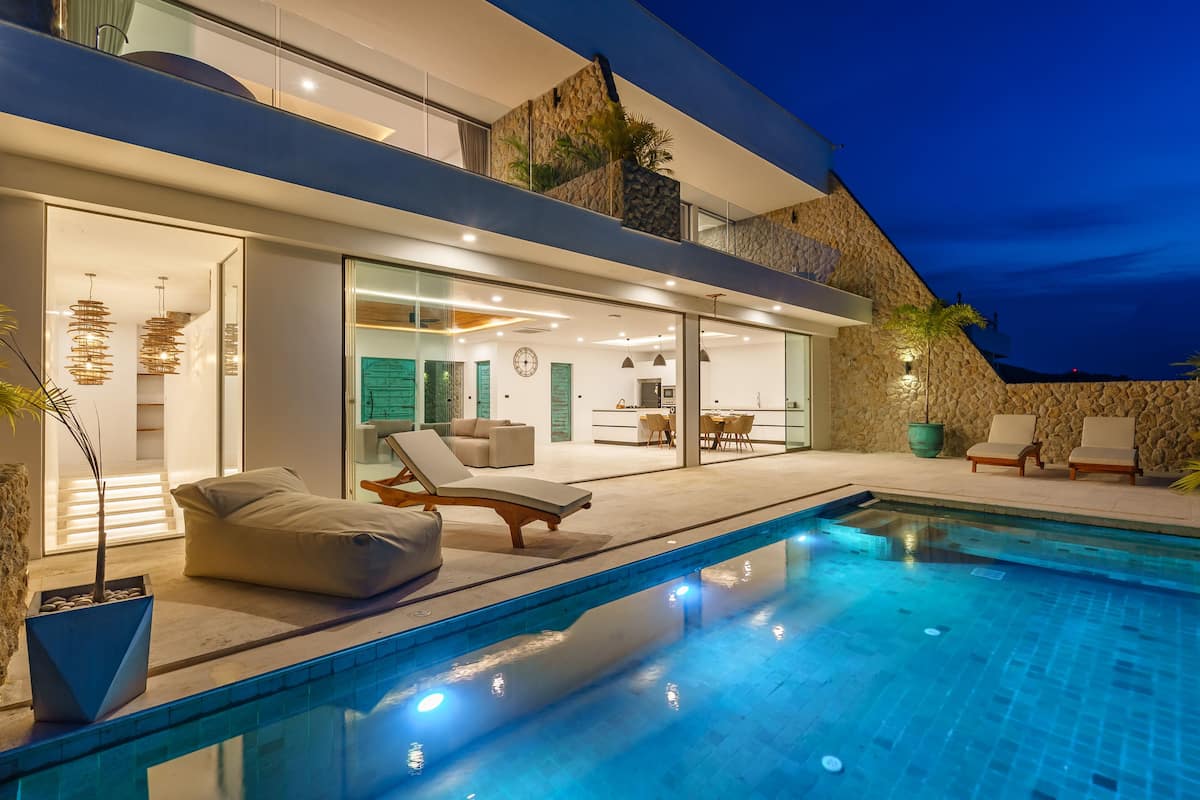
Since May 2025 a ministry notification limits hillside building on Koh Samui: 6-metre height above 80 metres and strict rules on steep slopes.
Anyone planning to build or buy a hillside villa on Koh Samui now has to work within a set of environmental zones introduced in May 2025. The rules come from a notification of the Ministry of Natural Resources and Environment that designates environmental protection areas in Koh Samui, Koh Phangan and Koh Tao. According to the law firm Lex Bangkok, it was published in the Royal Gazette on 21 May 2025 and runs for five years, to 21 May 2030.
Seven zones based on height above sea level
The notification was issued under section 45 of the 1992 environmental quality law. It divides the islands and the sea around them into seven zones. For villa owners on Samui the key ones are these, as summarised by Lex Bangkok:
- Zone 2: land below 80 metres above sea level. Sukhothai Inter Law notes rules here on setbacks from the beach, hotel size and wastewater treatment.
- Zone 3(1): land between 80 and 140 metres. Buildings may not be higher than 6 metres. At least half of the plot must stay open, and half of that open area must be planted.
- Zone 3(2): land above 140 metres. The 6-metre height limit also applies, with tighter limits on the size of the building and more open space.
Other zones cover the sea and small islands, where building is very limited or not allowed. Sukhothai Inter Law adds that only single houses are permitted in the hillside zone.
Steep land has its own limits
Slope matters as well as elevation. Lex Bangkok reports that on land with a gradient of 35% or more, only single detached houses are allowed, with a 6-metre height cap and a small footprint of 70 or 90 square metres depending on the plot size. On larger plots, 70% of the surface must remain permeable so that rain can soak in.
On slopes of 50%, mature trees with a trunk girth of 50 centimetres or more are protected and earthworks are restricted.
Why the rules matter on Samui
Hillside building is a sensitive issue on the island. In September 2024, Khaosod English reported that officials inspected 19 luxury villas in Lamai and Bophut that had been built without permission and faced demolition orders. The two legal summaries differ on small points, such as the exact day the notification took effect, so the official Thai text should always be the reference.
What it means for villa owners
For existing owners, the main point is paperwork. A villa with a valid building permit that matches what was actually built is in a far stronger position, both for resale and if officials inspect.
For buyers, high sea-view land may allow less building than its size suggests. Ask for the elevation, the slope survey and the permit before paying a deposit. This is news and not legal advice; a Thai lawyer and a licensed architect or engineer should confirm what applies to a specific plot. You can compare homes that are already built in our selection of property for sale in Koh Samui.